Happy Mother’s Day, Mom. Or is it Mum?

Hi, Ma!

Hi, Mom!

It’s downright un-American not to love your mother.  Mom, apple pie and Chevrolet, for you old enough to remember the motto.  Even rough-tough professional football players mug for the TV camera, mouthing, “Hi,Mom!”  (Why never, “Hi, Pop?”  Unfair.)  So we have a day to honor our mothers each year, the second Sunday in May, when we sell more flowers and cards than any other season.  And, if we are not able to take our mothers to dinner, we tie up phone lines and bandwidth wishing our mothers a Happy Mother’s Day.  Right?  Well, if you live in the United States or (at my last count) 82 other nations in the world, that is true.  Sort of.  That day may go under a different name, such as International Women’s Day if you’re in certain communist or former communist countries.

Actually, International Women’s Day is technically May 8th, because that is the day in 1917 that  women marched in its observation in Czarist Russia and helped bring about the Russian Revolution when the Czar’s troops refused orders to fire on the women.  But that’s another story, because International Women’s Day (started in 1909 to honor women in the socialist movement) really says nothing about mothers (thereby being more PC) and became more a way communist countries could give in to celebrating a popular capitalistic holiday under a different name.

Miss Anna Jarvis

Miss Anna Jarvis

Getting back to Mother’s Day, it’s been around a long time, right?   That depends on what you term “a long time.”  Anna Jarvis (no relation to Howard) started observing a day for mothers in 1908 with programs at Andrews Methodist Episcopal Church in Grafton, WV, and Wanamaker Store Auditorium in Philadelphia.  In Philadelphia it was reported that 15,000 people showed up for only 5000 seats!  After a vigorous and personally costly campaign, Anna got Mother’s Day recognized by Congress on May 8, 1914 as a national holiday, to be held on the second Sunday in May.  I am not sure of the vote count, but I pity the poor Congressman who would have dared vote against mothers.  Although Anna was soon appalled at the commercialization of her beloved holiday, it is the American way.  I would imagine the hoopla next year when it hits its centennial observation will make all previous ones pale in comparison.  On a non-commercial note, church attendance is the third highest for the year on Mother’s Day, just behind Easter and Christmas Eve.  “Okay, Ma, I’ll go to church with ya!”

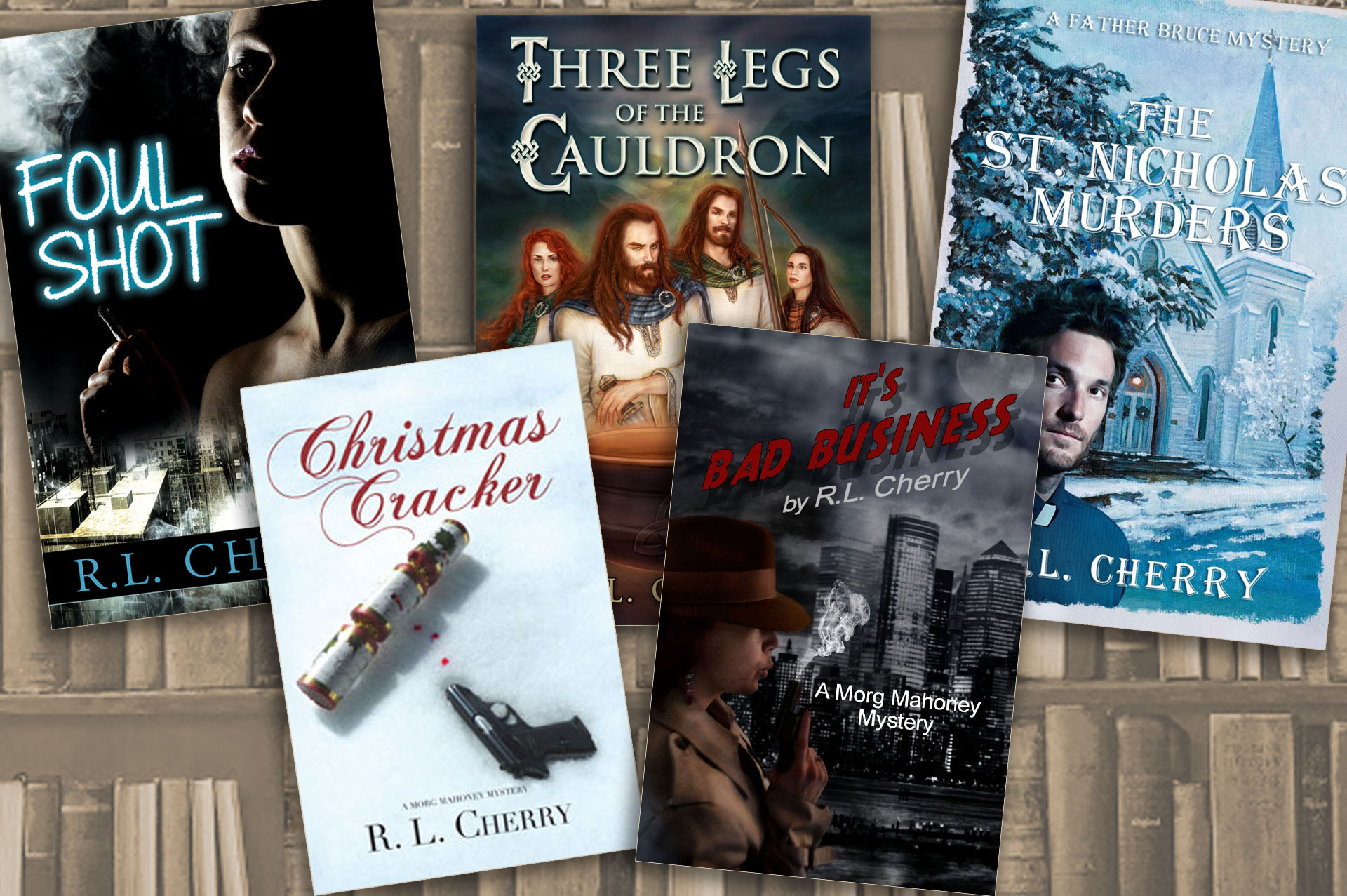
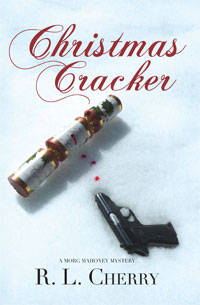
Well, that explains how it all got started in the U S of A, but what about the rest of the world?  Some type of observance is almost worldwide, whether it is tied to the American Mother’s Day, International Women’s Day, or a day associated with the Virgin Mary, as in many Roman Catholic countries.  There is one observance that deserves special mention, if only because of its uniqueness and because its British roots tie it to my book Christmas Cracker.  That is Mothering Sunday.  It is on the fourth Sunday in Lent, which means the date varies from year to year  It is centuries old, probably coming from when people returned to the church in their hometown (their “mother” church) on a particular Sunday.  It became a time when you went there with your mother, a rare occasion when industrialization made time off work a luxury.  Or perhaps it has to do with that Sunday’s Lesson from the Epistle to the Galatians in the Anglican Book of Common Prayer that declares, “Jerusalem which is above is free; which is the mother of us all.”  Whatever the case, it was after Anna’s successful campaign to make it an American national holiday that Constance Adelaide Smith was inspired to push for mothers to be recognized in the UK and Mothering Sunday became a British version of Mother’s Day.  Now Mothering Sunday is often called Mother’s Day in the UK.

British Postage Stamp

British Postage Stamp

When I lived on the Isle of Man, I had to plan ahead to send a card to my mother in America.  Mother’s Day cards were out in March, not in May, and had to be purchased then.  Not only that, although most cards referred to Mother’s Day, they also were to “Mum,” the affectionate British term for mother.  I started choosing the best card I could find, whether it be to “Mum” or “Mother.”  After all, it’s the sentiment, not the title, that’s important.

One final bit of irony: neither Anna Jarvis nor Constance Smith, the mothers of Mother’s Day, were mothers themselves.

May Day or Beltane

Beltane-style Bonfire

Beltane-style Bonfire

In the ancient Celtic world there were four fire festivals: Samhain (the Celtic new year on October 31-November 1 that gave birth to Halloween) , Imbolc (the beginning of Celtic spring on January 31-February 2 that has an interesting correlation to Groundhog Day), Beltane (the beginning of the Celtic summer on April 30- May 1, or May Day) and Lughnasadh (July 31- August 1).  May Day has no other real significance other than the beginning of the warmer or “bright” season.  In preparation for turning cattle to pasture rather than feeding them, they were “purified” by driving them between two bonfires (it is a fire festival, after all).  Daring young men would leap over the burning bonfires to prove their daring.  Considering this was also a celebration of fertility, when the earth would start delivering its bounty, it is ironic that a bad leap might end some rash lad’s chance do aid some lass’ fertility forever.

So, where does the name Beltane originate?  From the name of some god named Bel or a Gaelic word for “bright” or shining?”  Different sources have different theories, so there is not definitive answer.  We do know it is Gaelic, but its etymology has been lost in the mist of time.  Or should I say smoke of time.  Other cultures, such as the Romans and the Germanic peoples, had similar celebrations, but Beltane was definitely Celtic.

For that reason, I have a problem with Wiccans claiming it as theirs.  Wicca, a modern invention by Gerald Gardner, is a sycretistic amalgamation of various pagan religions with a whole bunch of New-Agish additions.  It is not, and I repeat, not Celtic.  The very name “Wicca” is a modern term meant to be Anglo-Saxon.  This is not an expose of Wicca, so I will leave it there.  But I say again, Wicca is not Celtic.

Ye Olde Maypole

Ye Olde Maypole

In this case, May Day is obviously tied to Beltane, but none of the celebrations have continued.  No bonfires with cows passing between them, no fertility festivals.  Nowadays, not even any Maypoles or Queen of the May.  It is a forgotten Celtic party-hearty night.


Irish Whiskey and Just a Wee Dram of Scotch Whisky

Some more observant readers will notice “Irish whiskey” and “Scotch whisky.”  This was no typo.  Irish and Americans distill whiskey, but the Scots distill whisky.  Since both words come from the English translation of the Gaelic translation (uisce beatha in Irish and uisge beatha in Scots Gaelic) of the Latin for distilled drink (aqua vitae or water of life, because it was thought to be medicinal for everything from the common cold to smallpox), it’s understandable that there might be a little confusion about spelling.  But enough etymology, what about the booze?

Copper Pot Stills

Copper Pot Stills

All whiskey (or whisky) in the British Isles is produced with basically the same process.  First, barley is malted, i.e., it is soaked in water for a number of days and allowed to sprout.  This allows it to produce the sugars necessary to make alcohol.  Then the malted barley is dried in a kiln and ground into a grist.  That grist is then put into a vat with water and heated to produce what’s termed a mash.  The mash is filtered to give a sweet liquid that is called the wort.  Then the wort goes into huge vats where it ferments in a beer-like liquid known as the “wash” with a low alcohol content (maybe 6-8 %).  Finally, it is pumped into a still (normally copper pot stills that are large, bell-shaped vessels with a bend at the top) and the alcohol is boiled off and collected by cooling coils.  This produces what is termed a low wine, which is about 25%-35% alcohol.  That is distilled again to produce whiskey.  In Ireland, it normally undergoes one more distillation.  This stuff, which is what early whiskey would have been like, is pretty raw and has plenty of bite.  In Ireland, it was (and is) called poteen, which has a strong similarity and kinship to backwoods America’s white lightening.  Nowadays it’s aged at least a few years and often blended with milder grain spirits in Irish whiskeys like Bushmills and Jameson, as well as Scotch Whiskys like Johnny Walker, Dewars and Cutty Sark, to name just a few.  Any questions?

Jameson Whiskey and Jameson 12 yr old

Jameson Whiskey
and Jameson 12 yr old

In honor of my heroine, the straight-shooting, hard-drinking female P.I. Morg Mahoney, I’ll focus on the Irish bit-of-the-creature in this post.  Morg’s poison-of-choice is Jameson.  Jameson has been made in Ireland since John Jameson founded the distillery in 1780.  It is a blended whiskey, having a corn-based spirit added, but is the only one I know that makes it in the same copper stills as is used for its malted barley wash.  It is called a single pot still, which is more traditional than the continuous still normally used to make bourbon.  It is incredibly smooth (or “Smooooth!” as Col. Potter used to say about his bourbon whiskey on the appropriately named show M.A.S.H.), yet has a great flavor.  So why wouldn’t Morg love it?  Maybe a little too much.  She does drink a lot more Jameson than I do all whiskey and whisky combined, but that’s her character.  I did do a tour of the Jameson distillery in Dublin.  Unfortunately, it is more of a museum than a tour of a working distillery, but they do have a nice gift shop.  For great distillery tours, there are a few in Scotland I could recommend.

Bushmills and  Tullamore Dew

Bushmills and
Tullamore Dew

Is Jameson the only Irish whiskey?  Not by a long shot.  Check it out online.  Another famous one is Bushmills, made in Antrim, Northern Ireland.  Since King James I of England (who was also King James VI of Scotland) granted to Sir Thomas Phillipps the right to distill whiskey in 1608, Bushmills claims to be the oldest distillery in all the world.  Because the company Old Bushmills Distillery was not organized until 1784, that might be debated.  Some Irish don’t like it because it is not from the Republic of Ireland.  I don’t like it because I think it is too bitey.  But then I don’t like the peaty Islay Scotch whisky for the same reason and some people love it.  I do like Tullamore Dew, but it tastes more like Jameson than Bushmills.  In whiskey or whisky, it’s all a matter of taste.

Originally, there would only have been one type of whiskey from any distillery and it would not have been a blended.  To appeal to a wider customer pool, the stronger-flavored single malts gave way to blendeds in the last century.   But tastes have changed and now people want “the good stuff.”   Hence, the rise in popularity of expensive single malts in Scotch as well as single malts and aged single-pot Irish whiskeys.  Oak casks that once housed sherry, bourbon, cognac or Madeira infuse a slight nuance from their original usage into the whiskey or whisky.  What’s next?  I have no idea, but I am sure distillers will come up with a new way to produce a more expensive, more elite bottle of booze.  After all, a bottle of 64-year-old Macallan single-malt whisky in a Lalique Cire Perdue decanter sold in 2010 for $460,000.

Finally, good whiskey (and whisky) is to savored, not knocked back as shots.  It is to sipped, not slurped.  It is not to be mixed.  Single malts and single pot still whiskeys can have a splash of water and blends are okay with ice.  No mixers, including soda, improve a good Scotch whisky or Irish whiskey.  If you want to drink to get drunk, find another choice.  Cheap vodka or tequila, perhaps.  Don’t waste your whiskey.

Accuracy in Guns or Gunning for Accuracy

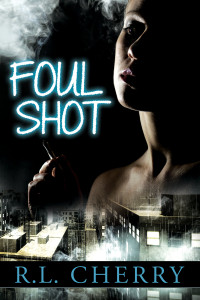
While it may not currently be politically correct to talk about guns, my characters carry them.  Morg is a P.I. in Christmas Cracker and Vince is a Chicago PD detective in the soon-to-be-released Foul Shot.  Neither of them run around shooting up the neighborhood, but carry them in their respective jobs.  However, I try to make their guns and and the guns of their foes accurate in what they are and how they work.  Sadly, this is not always the case with authors.  While you don’t have to have fired the weapon you describe, you should do the research by talking with someone knowledgeable of doing a little Net research to be accurate.  Hit your mark, so to speak.  So let’s start with a few who were way off target.

Let’s start with an “automatic revolver.”  It means that when you fire it, the hammer is automatically cocked to fire again. If you are a fellow reader of mystery and P.I. novels, you will probably have come across that term.  There have been very,very few made and the most famous is the Webley-Fosbery that was made from 1901 until 1915.  Not exactly a common handgun.  Very rare, in fact.  So why do writers use the term?  Because Dashiell Hammett used it in The Maltese Falcon (and Bogart mispronounced it in the movie of that name).  Hammett knew the gun and named it in his book.  So why has such a rare gun cropped up in later books?  Poor research. Those writers are not talking about a specific gun, but are using the term generically, as though all revolvers are also automatics.  However, while an automatic cocks itself after every shot, so that a relatively light pressure on the trigger is all that is needed to fire, the revolver does not.  Well, except for the Webley-Fosbery and a very few others.  Considering the times I’ve read about automatic revolvers in books, it must be a favorite among killers.

This brings me to another pet peeve: safeties on revolvers.  I have read about some character releasing the safety on his revolver.  There’s no such thing.  Nowadays, most revolvers are double action, which means when you pull the trigger the hammer comes back and then strikes the firing pin.  There’s no “safety” to release to make it fire.  But the pull of the trigger is, in itself, stiff enough to be a safety.  So if you read about someone releasing the safety on a revolver, it’s pure B.S.  Bad Search-engine.

Then we have recoil.  If you’ve seen Rambo or Arnie movies with the hero grabbing a couple of .50 caliber machine guns and storming in, guns blazing with belts of ammo draped around them, you know fantasy.  There have been instances in battle where a soldier has actually picked up one machine gun and fired it, but they are rare.  Accuracy goes down the tubes.  Recoil is one good reason for not trying.  There’s no way anyone (even Sly or Arnie) could hang on to one of these bad boys while firing with one hand.  But we’re not talking movies here, so let’s go back to the books.  I recently read a mystery where a woman, who had never fired a gun before, shot an attacker at the top of a staircase above her with a 9mm handgun and hit him in a non-lethal part of his body on purpose.  The recoil of the shot slammed her against the wall and almost knocked her out.  Wow.  Since guns always tend to shoot high when shooting uphill or downhill, that was one lucky shot.  Hitting the attacker in a non-vital part of his body was even luckier.  But the recoil blows me away.  Obviously, the writer had neither fired a 9 mm or talked to anyone who had.

There is more, but I think I’ve made my point.  What’s my point?  Research, research, research.  When I wrote Foul Shot, I went to Chicago, spent time with the police and met people in Little Italy.  A Catholic priest, who is a friend, critiqued my book and I even visited hospitals mentioned in the book.  It’s release has been delayed because I am researching exactly what a certain Chicago hotel was like in 1982.  Will I make mistakes?  Very likely.  But it won’t be because I was not willing to ask questions and learn from others.


St. Patrick’s Day, Green Beer and Blue Mead

St. Patrick’s Day, originally a feast day of the Catholic church, has become a major American drunken  celebration.  Before I get into the down and dirty, let me assure you that St. Patrick never drank green beer.  In fact, drinkers in ancient Ireland had a choice of ale (no hops) or mead (honey based), unless they wanted to pony up for imported wine.  So beer is obviously not an ancient Irish tradition.  How about the color green?  Is it Irish because Ireland is called the Emerald Isle?  This is a question that is still up for debate.

First raised in 1919, the Irish flag has three wide, vertical stripes.  In reverse order, one is orange, one is white and one is green.  This flag was designed in an attempt to join the Catholic and Protestant factions as a united Ireland.  It is easy to explain why the orange stripe represents the Protestants.  The Protestant William of Orange (William III of England) defeated the last Catholic king of England, James II, at the Battle of Boyne in Ireland on July 1, 1690.  The militant Orange Order of Irish Protestants take their name from the king who originally came from the Dutch principality of Orange and celebrate (mistakenly) this victory on July 12 each year.  Since William’s victory led to the horribly punitive laws against the Catholics, this “celebration” is strictly for militant Protestants.

Okay, how about the white stripe?  If you were sitting in between two groups who had a history of fighting each other, what flag would you raise?  It is generally accepted that the white is meant to be a flag of truce between the warring factions.

Now we come to the green, the main topic of this post.  It’s often assumed that since time immemorial green was the national color for Ireland, perhaps established by the patron saint associated with the “wearing of the green,” Patrick himself.  Not so.  Blue was the color of Ireland for centuries, a royal color and the one traditionally associated with St. Patrick.  The first known usage of a green flag was with a harp on it in 1642.  It was only in the years after orange becoming the color of Protestants in Ireland, sometime in the mid-eighteenth century, that green became the established color of Catholic Ireland.  Perhaps it is because the green shamrock was identified with that patron saint, Patrick,  Perhaps it is because Ireland is so green and is now known as the Emerald Isle.  Perhaps it is none of the above.  However, whatever the reason, St Patrick and Ireland are now firmly greened.

And so, we return to green beer.  It is about as Irish as the Union Jack.  Or a margarita.  It’s just the American misconception of what is Irish.  So be a rebel.  Be a traditionalist.  Be an individual.  When your friends ask if you want a green beer, say, “Heck, no.  I want a blue mead.  After all, that’s a real Irish drink.”

The Decline and Fall of the English Language

“Would you like any more coffee?” you ask.
“I’m good,” is the response. And no one blinks an eye.  Adjectives and adverbs are becoming interchangeable.  Or maybe indistinguishable.
“You promised to be here by noon and it’s now after two.” you say.
“My bad,” is the response. And no one shivers at the sinful syntax.

What has happened to the English language?  Although there have been changes over the centuries, they were evolutionary rather than revolutionary.  That is no longer so.  Google is now listed as a verb in that last bastion of language traditionalism, the Oxford English Dictionary.  Mind you, I am not saying that is wrong.  Brand names often become the generic term in common usage, such as Kleenex and Scotch tape, but it is rather rare to have that happen in the OED and never so quickly.  It is a sign of the times, although not a bad thing.  It is the rapidly progressing decay of proper English that appalls me.  It is not so much an evolving of, or even radical revolution in, the rules, but a total disregard for them.   “Rules?  We don’ need no stinkin’ rules!”

If you have read any of my writings, you will know that there are times when I will use a sentence fragment, often in dialog.  Why?  Because we all do it in everyday speech.  In the same way, having a character answer a question with, “It is I” rather than the incorrect, “It’s me” would sound ridiculous.  I use the same chatty tone in my newspaper column and this blog as well.  Yet, I choose to do this to maintain a certain voice.  Know the rules before you break them.  Sadly, fewer people know the rules that they break on a habitual basis.

Texting has been no friend of correct spelling.  Knowing when “i” is before “e” is fast becoming an arcane ability.  In fact, my retired-school-teacher sister was told by one of her principals not to teach spelling at all because it was not on the standardized California tests, which were all that mattered to the school’s rating.  Yes, there is spell check, but will it know whether you meant to write there, their, or they’re?  Or, for that matter, whether or weather, write or wright?

When we come to examples like my first two, it gets worse.  “Me and him are going to the store.”  I cringe when I hear someone say that.  “It be cool.”  Ouch!  “I don’t got nothing.”  Yuck.  I could go on, but I’ve made my point.  I’m not saying that I’ve never made a mistake.  I am aware of two typos and a grammatical error in the printed version of Christmas Cracker (which I did correct in the Kindle version), but they bother me greatly.  If we could imbue the youth with a grammatical and syntactical  conscience then there might be hope.  I hate to say it, but I do not see much chance of that.

Maybe I should join the crowd,  Down with the tyranny of grammer and spelling rules!  Guy Fawkes lives!  Texters of the world unite!  You have nothing to lose but your ability to spell and write a complete sentence!

ZUP DUDE? WUTEVR NE1 RELY KEWL SEZ IS GR8

EOR


Oscars Wild in 2013

Well, there there were a few risque gowns, but from what I’ve seen online, there were also some stunning ones.  Probably that had to do with women like Halle Berry wearing them.  I mean, women like Halle could wear sackcloth and look good.  Well, considering Helena Bonham Carter’s attire, maybe not.  Still, more class than some other years.  But the emcee?  Hmmm.


Not being a “Family Guy” fan, Seth McFarlane is not my hero and he lived up to his status on Sunday.  While he can sing better than most, if not all, previous hosts, “We Saw Your B—-” is hardly an Academy Awards-worthy song.  His jokes, though tempered to non-existent as the night wore (and bore) on, were offensive at best.  But isn’t that what should be expected from Seth?  Does humor have to be coarse to be funny?  Bob Hope may have had old, tired jokes as the years piled up, but he had class, a way of delivering what you knew was coming in a way that got a laugh.

Women’s, Jewish and family-oriented organizations hated the show.  But it had its highest ratings since 2007.  Why?  From my aerie in the Sierra Nevada Foothills (and from my online reading), I see two reasons.  First, the nominees for best picture were mostly big successes on the silver screen.  Second, we’ve come to love watching jerks be jerks.  That includes emcees.  Offensive is good.  So expect more of the same in the future, because nothing matters but the ratings.

That’s my take on the the awards ceremony named after Margaret Herrick’s Uncle Oscar.

Anti-Academy Awards Party

I am not anti-movies.  I love many of the old ones.  Bogart is my favorite actor.  I even love some movies made after 1968, like Bladerunner, Lion in Winter and The Man Who Would Be King.  Movies like Silverado, Enchanted April and Free Range are great watches for the sheer fun of them.  I’m also a big Batman fan and have enjoyed that series of movies.  So why am I anti-Academy Awards?  Let me count the ways (or reasons).

Movies are just not as good.  I’m not talking about production values, sound and lighting, special effects or even talent of acting. I’m talking about the plot, choice of subject matter and that je ne sais quoi attribute, quality.  While Lincoln was well acted and worth watching (considering the competition, I think it should sweep all the awards), a piece of tripe entitled Django Unchained is in the running!  That the latter movie is even nominated for anything other than “the most nauseating work of the year” tells me much about Hollywood and the whole nominating process.  It is not that we do not have acting talents anymore (although I do feel they are getting older and fewer each year), but the subject matter and the scripts are sinking to the lowest level.  What used to be X-rated is now the new R.  Like The Sessions, with full frontal nudity.  And that’s the way it’s going to be. But I don’t have to like it, nor do I have to celebrate it with a party.

Then there are the actors, both male and female (I guess actress is becoming a sexist term).  Sometimes they seem to be more into politics than into acting.  Why does acting make you an expert in that field?  No matter what your political persuasion, I think you will agree that being on the silver screen does not make you politically wise or insightful.  Bogart never did interviews about his politics, nor did Hepburn, Bacall or Cagney.  I listen to men and women who have spent their lifetimes studying  the world and its many problems far more than someone whose life is playing a role.  And we fall down and fawn all over them.  Just my uptake.

Then they come prancing along the red carpet on Awards night.  The women seem to try to wear what will reveal as much as possible or look as strange as possible.  The men look like they are fighting the formal dress code.  What happened to class?  Yes, I know many of the old actors had less-than-admirable lives.  Yet they kept up the facade.  Why is that better?  The facade implies that there is an ideal, that the gutter is not the place to be.  Now the gutter is the ideal.

I do not condemn those who enjoy the Academy Awards, who have a party with food and fancy dress.  My wife Kelly is one.  She does not condone what has happened to the movie industry.  She, like many others, remember those “thrilling days of yesteryear” when there was glamor in Hollywood, when stars at least tried to seem memorable for something other than decadence.  It is a love of tradition rather than what is happening now.


Until something changes, however, I will stick to an anti-Academy Awards party.


Massacred St. Valentine’s Day

Okay, I’m a romantic. Casablanca is one of my favorite movies.  I’ve even watched a few “chick flicks” and liked one or two.  Don’t get me wrong, Lifetime and Hallmark are channels I religiously avoid.  Yet, I have trouble understanding how a man could forget his wife’s birthday or anniversary.  And Valentine’s Day?  Come on, there’s so much hype on that day, you’ve got to be brain dead to miss it.  Oops!  Have I offended any guys out there? If so, I ain’t sorry. So let’s talk about romance and St. Valentine’s Day.

Who was this Valentine guy and why do we connect him with romance on February 14th?  Good question.  I have no definitive answer.  There was no Valentine who flew around with a bow and arrow. looking for lovers to shoot.  However, there was a martyr named Valentine who died on Via Flaminia on February 14.  To quote Tina Turner, what’s love got to do with it?  We all need love.  Anyone who denies that is lying or a sociopath.  That means we, as a people who love holidays, need to have a holiday for love.  Holiday is a modern way of saying Holy Day, a commemoration of a saint or sacred event.  And what is more sacred than love?  But what has Valentine to do with love?  Apart from legends that I cannot buy into, nothing.  Yet, that does not negate the holiness of love.  The Apostle Paul himself wrote that without love, we are like “a clanging cymbal.”  That’s cool.

Okay, time to sum this all up.  Why is this about a massacred St. Valentine’s Day?  Because movies like Casablanca are no longer made.  I am old school.  I don’t hate sex (far from it), but think the fade to black is better for a movie with scenes that used to be X-rated not all that long ago.  Leave a little romance to what we watch.  I am no prude.  I read Playboy in high school (at least when I could sneak it into my locker), but even then liked a little romance added to my view of sex.  Lady Chatterley’s Lover over The Tropic of Cancer.  This is not a call to censorship (a poor solution, at best), but a call for us to not be sold on Hollywood’s version of romance: gratuitous sex.   Let’s have a kiss that lingers instead of a quick hop into bed.  Let’s not massacre romance.  Let’s not massacre St. Valentine’s Day.


Mardi Gras, Pancakes and Lent

Everyone knows about Mardi Gras, right?  Mardi Gras, or Fat Tuesday, is a big party that consumes the city of New Orleans as well as many other metropoles across the nation and around the world.  Rio’s Carnaval makes New Orleans’ version look tame.  Now you probably have seen more in movies and on TV and can get a lot more online about these than I can write here, so I’ll only talk a little about the Mardi Gras parade in the thriving metropolis of Nevada City (although on Sunday rather than Tuesday to attract out of town visitors) and Shrove Tuesday on the Isle of Man, where I lived for five years.  Well, I admit that calling Nevada City (population 3068 in 2010) a metropolis is pushing the envelope, but it does do its best to have a “really big show.”  The parade has marching bands, jugglers and brightly masked, costumed participants.  Bead tossing has been curtailed (but not completely stopped)  due to possible injuries and damage to property, but cheap and garish plastic beads abound in emulation of the slightly larger New Orleans affair.  And, of course, adult beverages.  However, the emphasis in Nevada City is on being a family-friendly event rather than the wild bacchanalia you find in New Orleans or Rio.  For more on the Nevada City event, click here.

So what does all this have to do with pancakes?  A lot.  In many Anglican churches throughout the Western world, there is a Tuesday night dinner of pancakes.  The whole reason for Fat Tuesday and Shrove Tuesday (click for more info) is the same: get rid of all those tempting goodies before entering into the 40 days of Lent, the time when denominations like the Anglicans, the Roman Catholics and the Lutherans give up something like desserts, alcohol or some other such essential part of life in preparation for Easter.  In fact, shove is the past tense of an old English word shrive, which means confession, penance, and absolution.  No, this is no sermon, but if you want Mardis Gras, Shrove Tuesday and Lent to tie together, bear with me.  Mardi Gras is French.  Shrove Tuesday is English.  Now get ready for wild exaggerations and generalizations that may possibly have a wee bit of truth.

When the French dispose of temptation, they do it by partying until the temptations are consumed or they are too wiped out to care if any are left.  The British sit around in church and eat pancakes.  Now I am British and, to my knowledge and according to my DNA test, have no French blood, so you know this is not a slam on the Brits.  In fact, nine months later, while French past revelers are going through paternity suits and divorces for a night they were too drunk to remember, the Brit’s are sitting by the fire with a cuppa tea.  But lets return to the day after Mardi Gras and Shrove Tuesday: Ash Wednesday. (Click for more info)

Ash Wednesday is the beginning of Lent.the time before Easter when you give up something you like in order to experience a little of the deprivation Jesus felt during his 40 days in the wilderness.  So on Wednesday, the Brits go to church (at least those who do) with a full stomach and no sweets in the house while the French go to church (at least those who do) with a hangover, no memory of the night before and a diminished stock of booze.  And that’s the simplified version of the connection between Mardi Gras, pancakes on Shrove Tuesday and Lent.